
Craig Barrow is a designer working across objects, sculpture and spaces. His practice is rooted in close observation of patterns, materials and relationships; both human and natural, and explores how things are made, how systems behave and how people interact with objects and environments.
Through processes of abstraction, imitation and re-contextualisation, these observations evolve into new forms and environments, becoming the basis of his work.
Born in Nottingham, UK, Craig studied 3D Design at the University of Brighton and now lives and works in Berlin.

Alaska Alaska
Clubcommission Berlin
FILA
Freunde von Freunden/Friends of Friends
Liebeskind Berlin
Marjan Van Aubel
Matylda Krzykowski
Nelly Ben-Hayoun
Nike
Peggy Gou
Refraction DAO
Virgil Abloh
YUN
Neukölln, 12057, Berlin

Kleinladungsträger is a series of storage containers based on the classic transport boxes of the same name, redesigned in anodised aluminium with Jesmonite accents; an opulent juxtaposition to the injection moulded polypropylene of the originals.
The original kleinladungsträger (small load carrier) more commonly known as the Eurobehälter, Eurobox or KLT, was originally developed by the Verband der Automobilindustrie (German Association of the Automotive Industry) as a means to optimise the logistics chain in the transport of small car components via a reusable, uniform and systematic shipping container. The standard was subsequently adopted by and now ubiquitous across a broad range of industries, with it’s impact extending from manufacturing to retail design to furniture and beyond. The kleinladungsträger was a true utopian vision for the transportation of goods, objects and an ideology of collaboration, exchange and trans-disciplinary development.
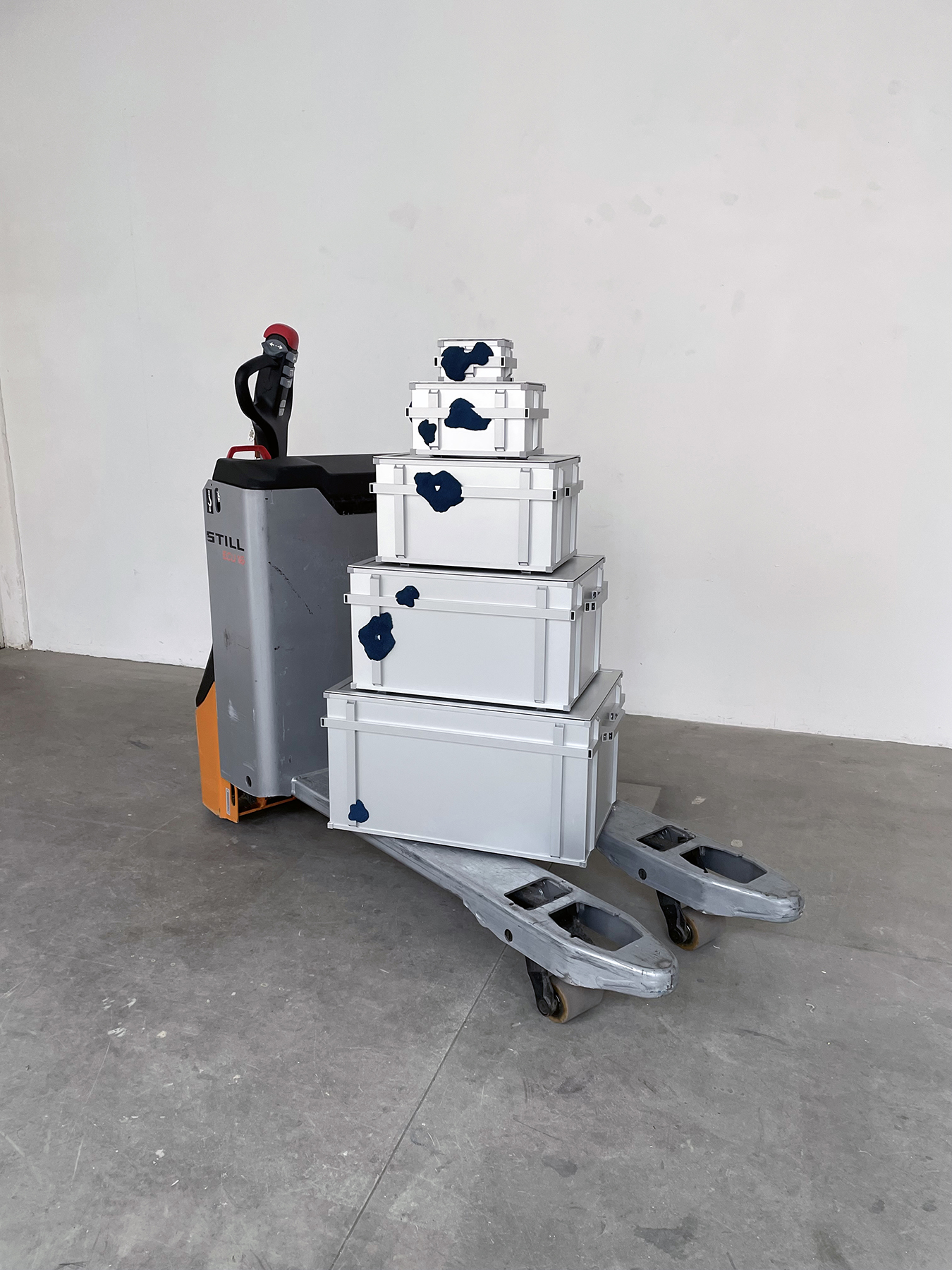
The material choice in this reinterpretation is a homage to the aluminium car parts that the containers were first designed to transport, simultaneously, accentuating the elegance and significance of such a simple tool and it’s influence on the infrastructure of the modern age. Emphasising a further correlation to this relationship of container and contents, the series snuggly nest within one another.
As the containers decrease in size, a second element emerges; a colourful, amorphous entity gradually encroaches, expanding its presence with each smaller iteration. This metamorphosis embodies a narrative of gradual evolution, where utilitarian origins have developed into significant influence. An object, initially a byproduct of another, can transform into one with its own stature and aesthetic, carrying it’s own story and legacy.
Photos: Michael Popp, Holly-Ann Barrow, Omri Livne
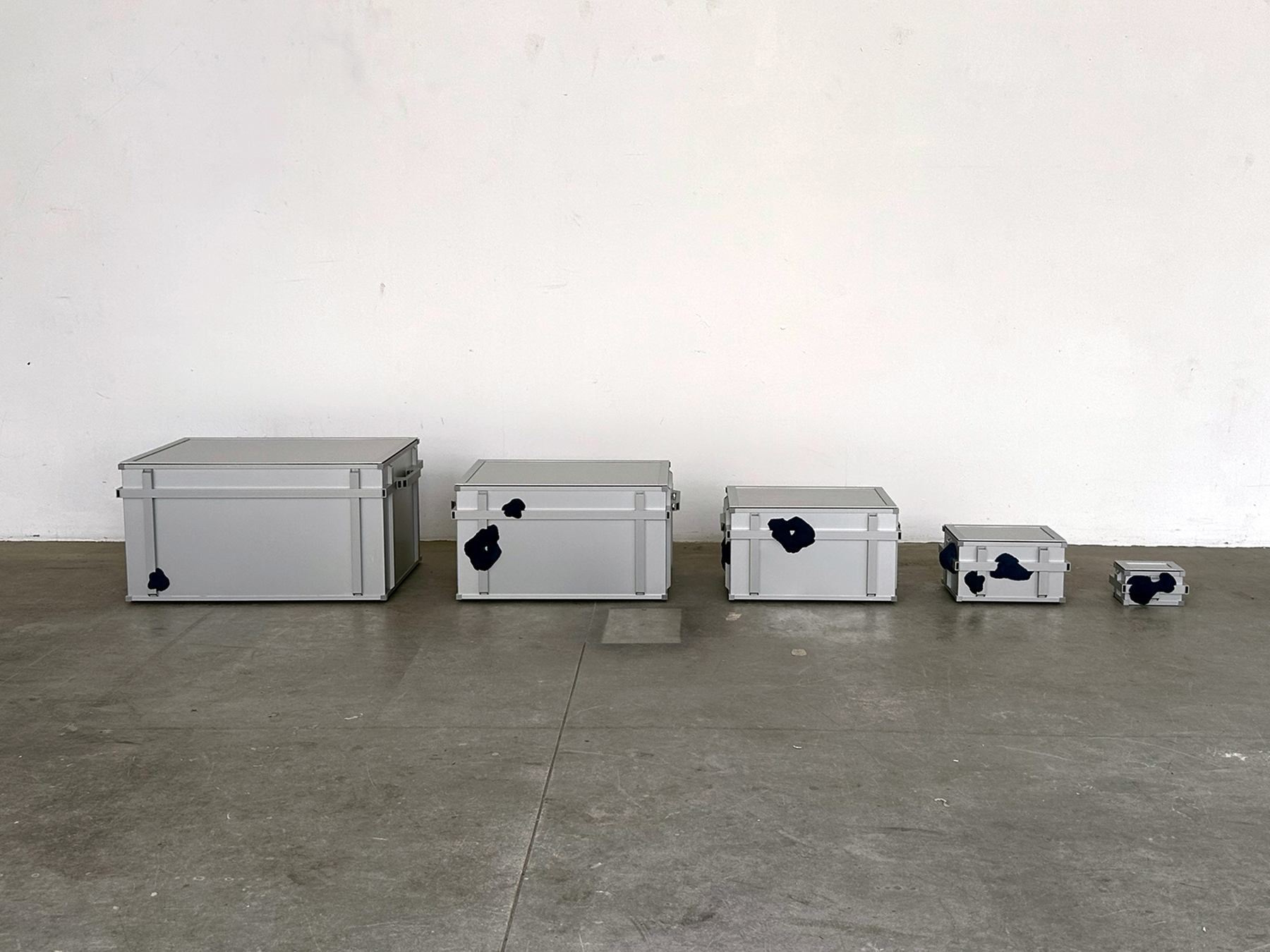
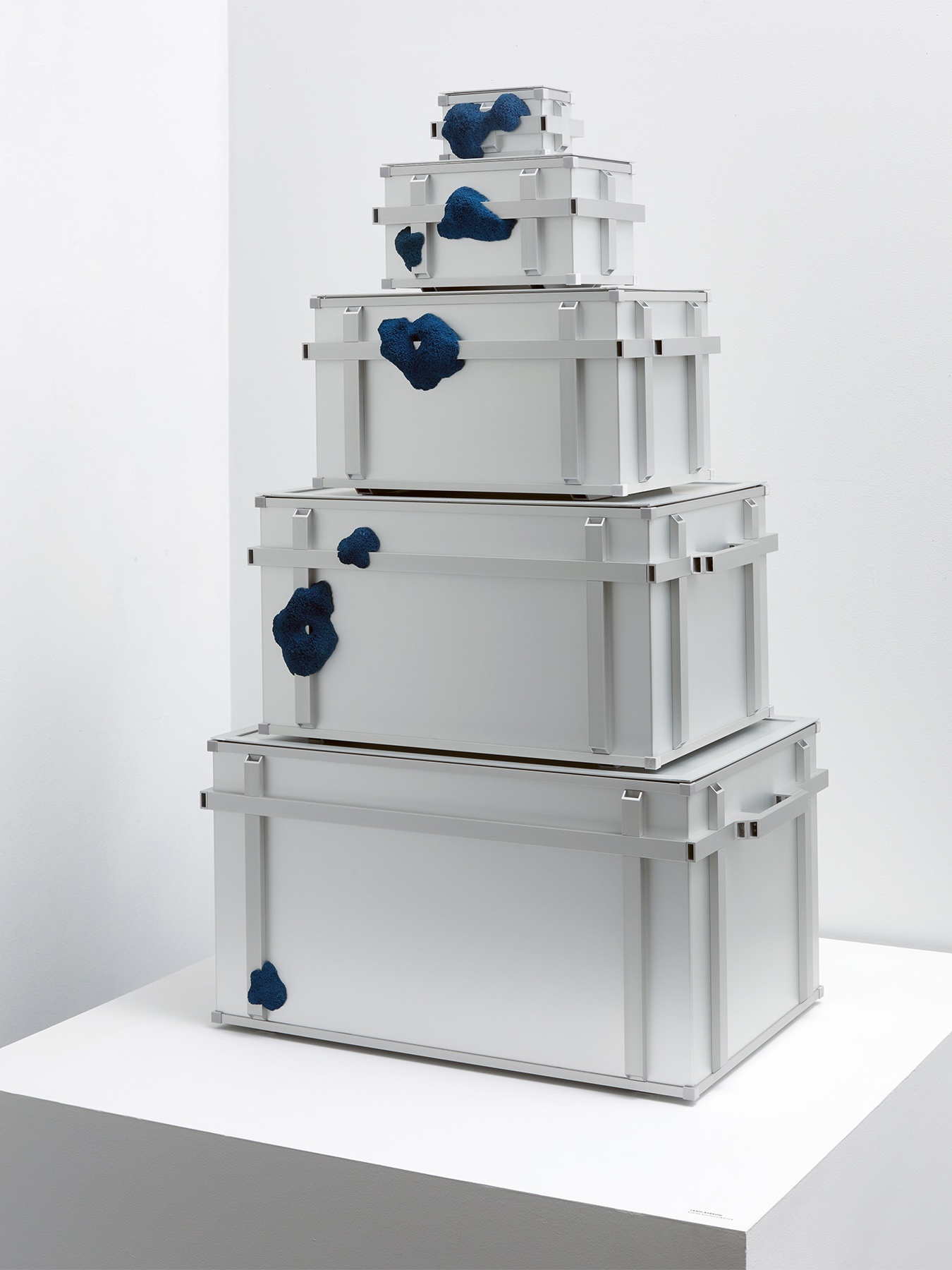
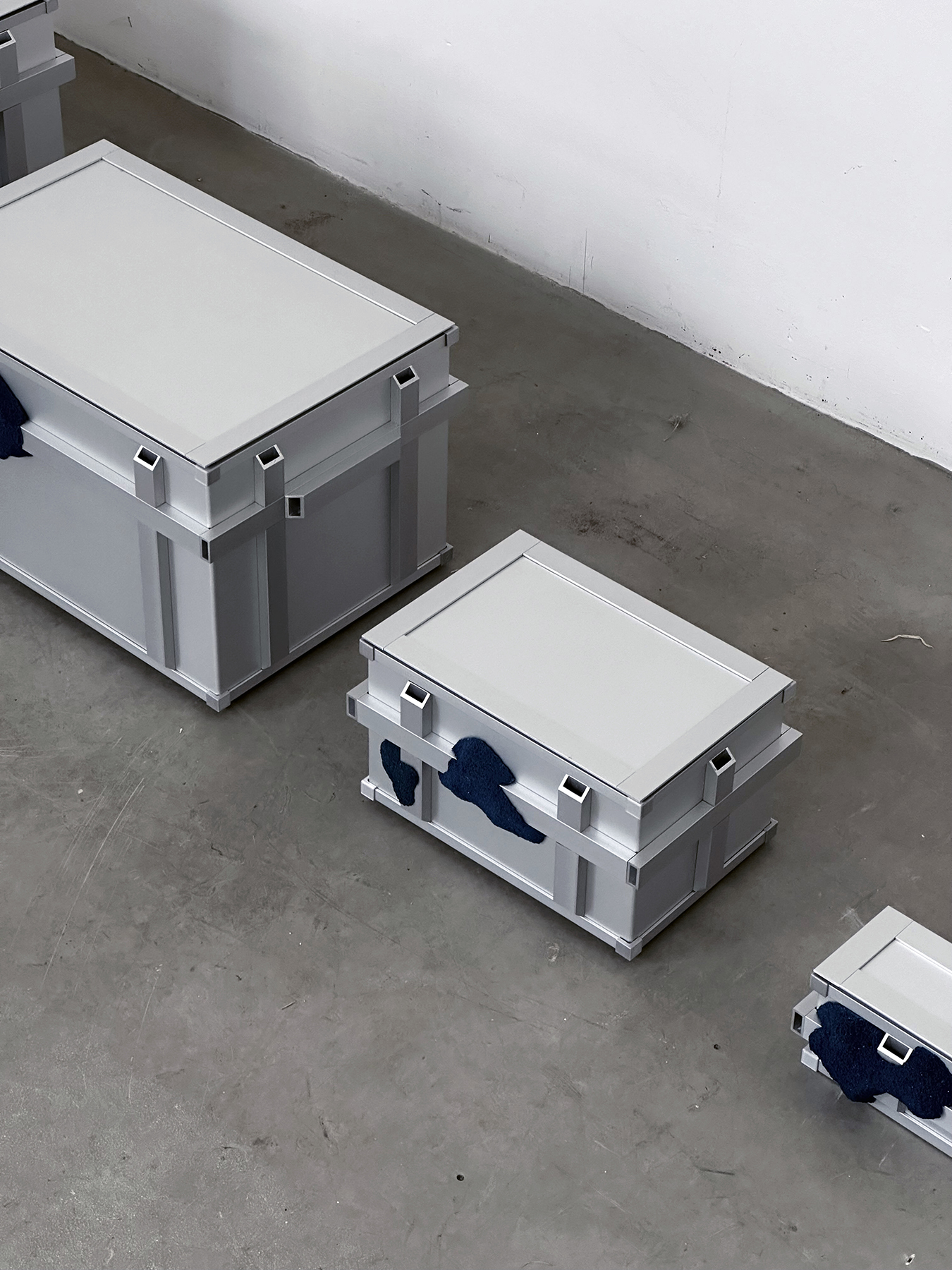
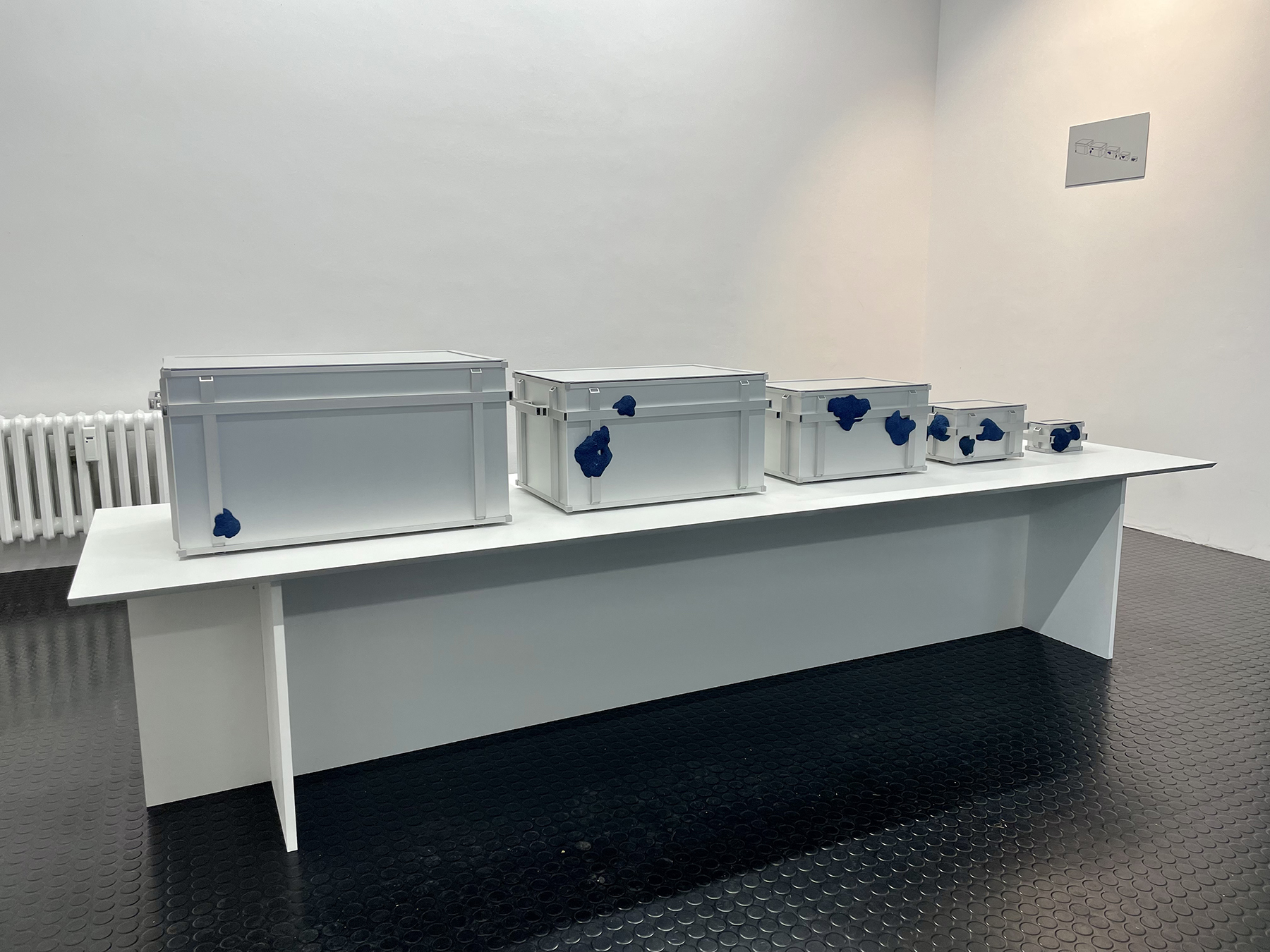
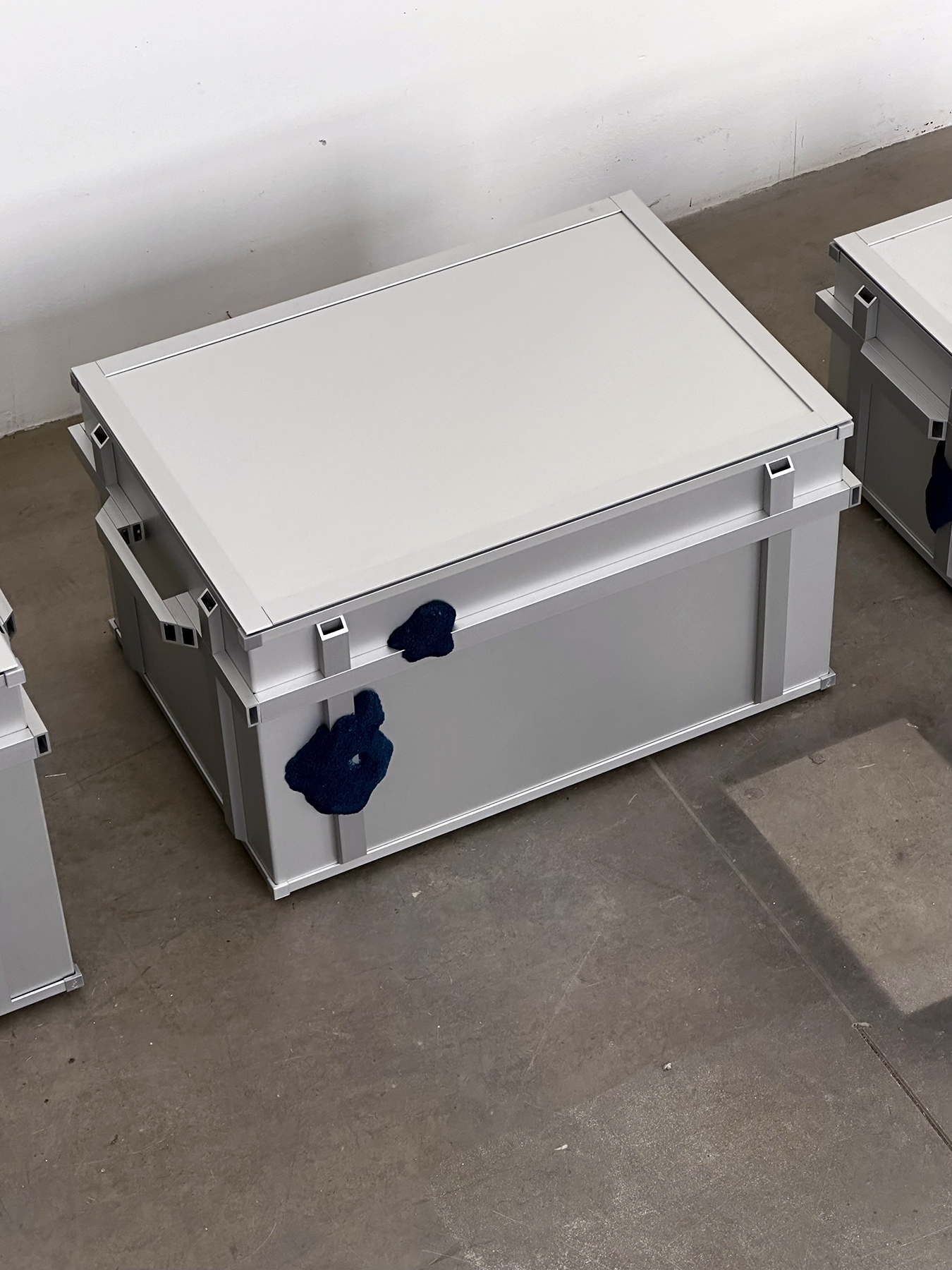
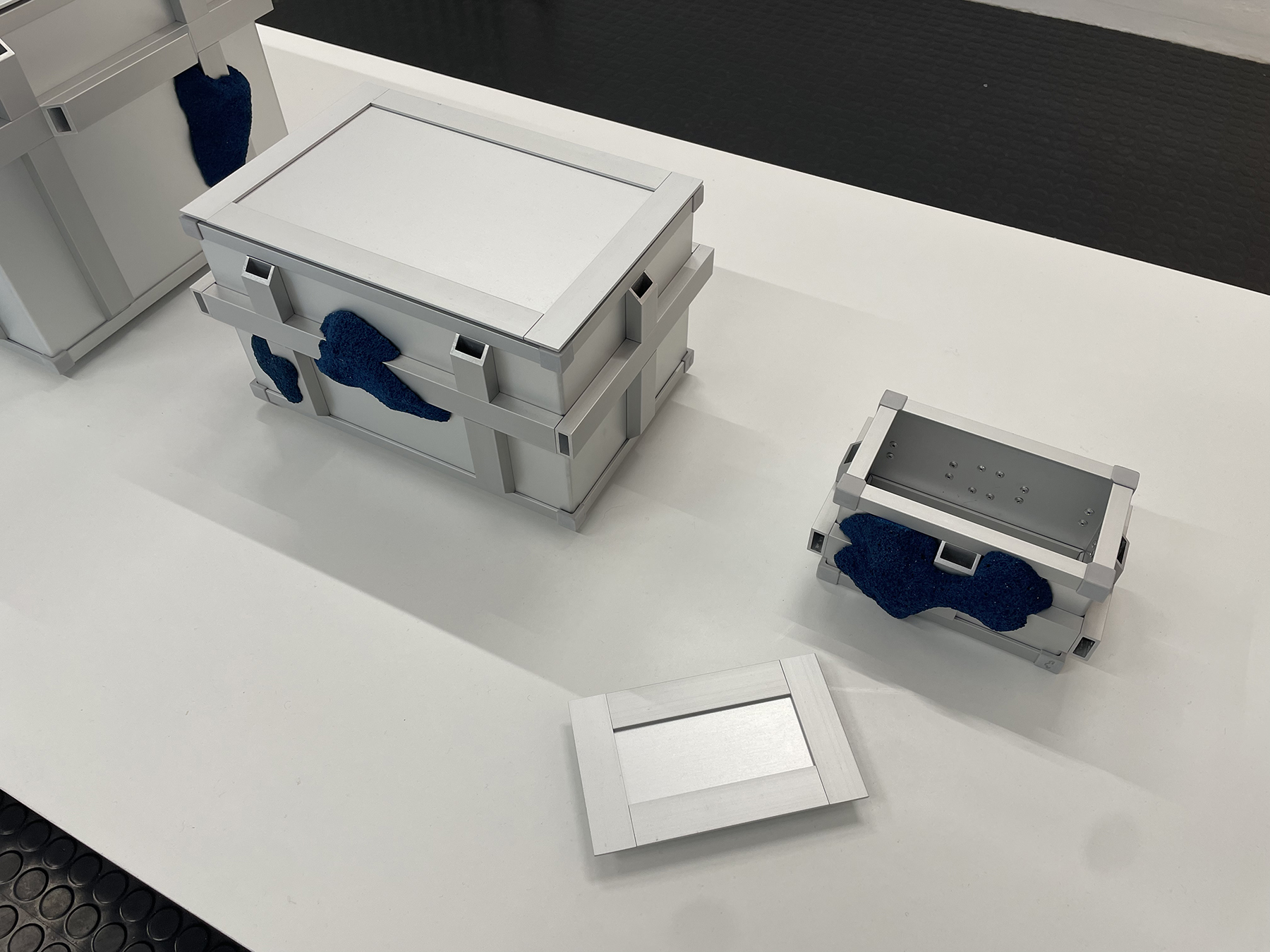
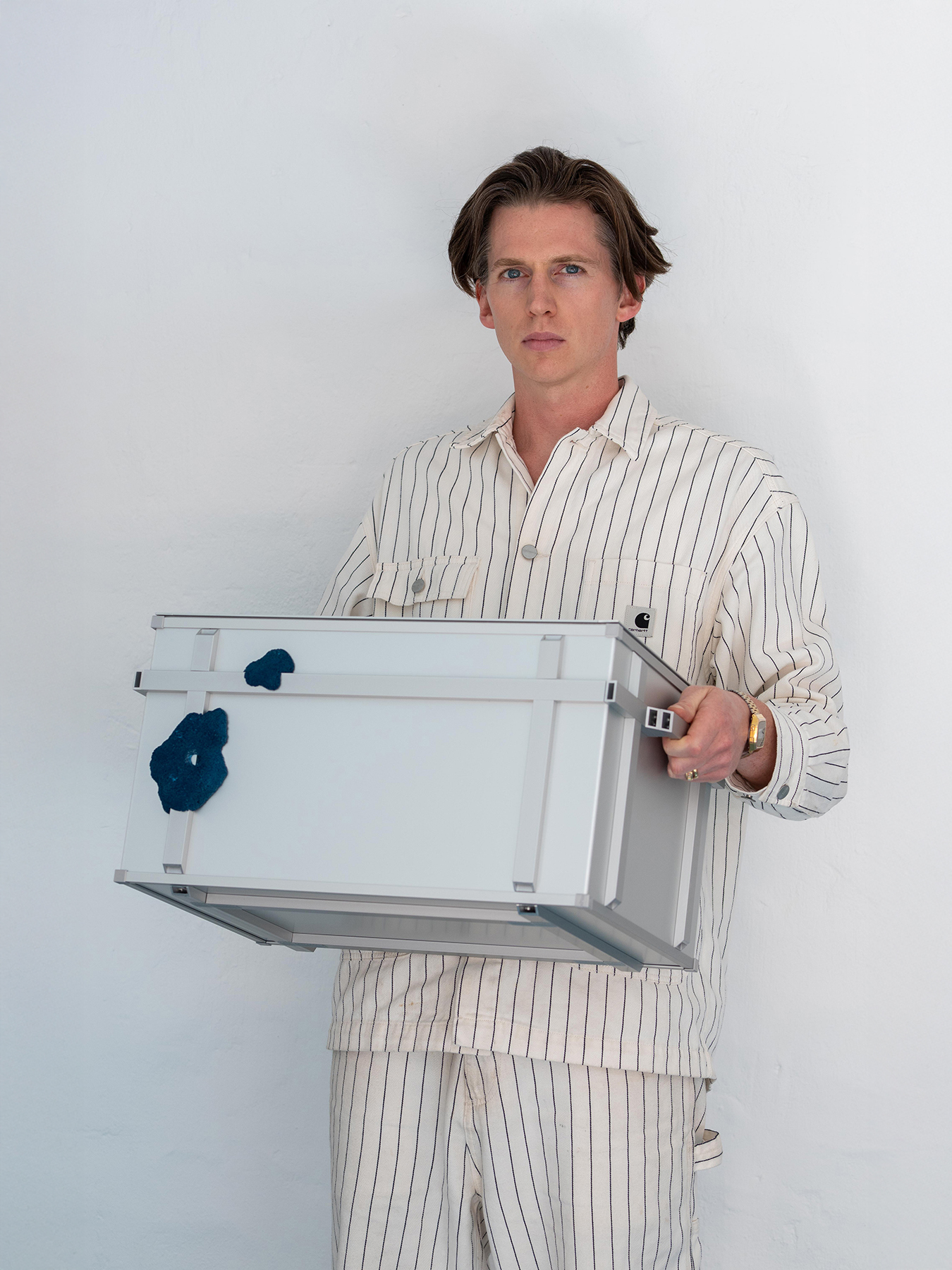


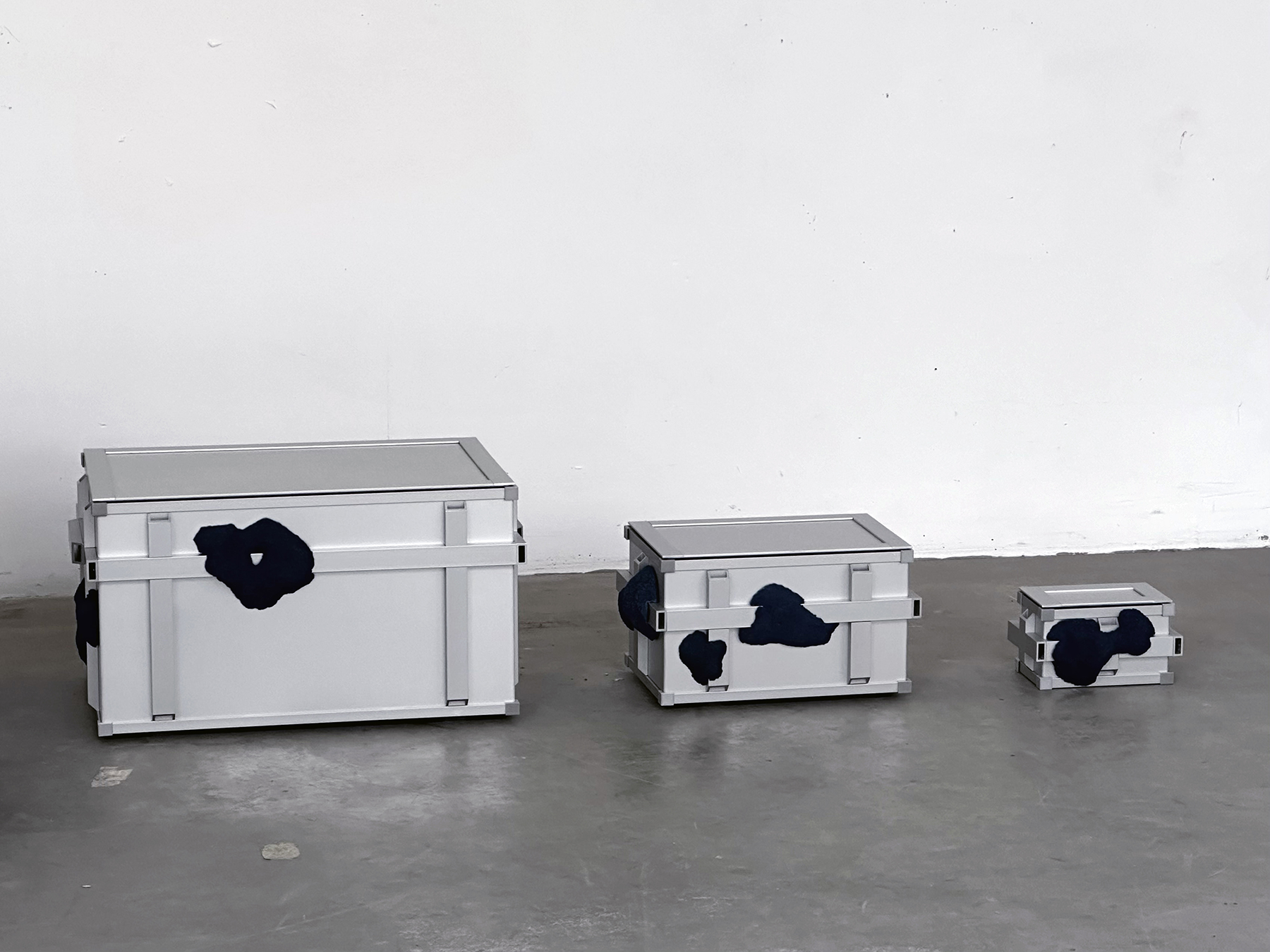
Kleinladungsträger is a series of storage containers based on the classic transport boxes of the same name, redesigned in anodised aluminium with Jesmonite accents; an opulent juxtaposition to the injection moulded polypropylene of the originals.
The original kleinladungsträger (small load carrier) more commonly known as the Eurobehälter, Eurobox or KLT, was originally developed by the Verband der Automobilindustrie (German Association of the Automotive Industry) as a means to optimise the logistics chain in the transport of small car components via a reusable, uniform and systematic shipping container. The standard was subsequently adopted by and now ubiquitous across a broad range of industries, with it’s impact extending from manufacturing to retail design to furniture and beyond. The kleinladungsträger was a true utopian vision for the transportation of goods, objects and an ideology of collaboration, exchange and trans-disciplinary development.
The material choice in this reinterpretation is a homage to the aluminium car parts that the containers were first designed to transport, simultaneously, accentuating the elegance and significance of such a simple tool and it’s influence on the infrastructure of the modern age. Emphasising a further correlation to this relationship of container and contents, the series snuggly nest within one another.
As the containers decrease in size, a second element emerges; a colourful, amorphous entity gradually encroaches, expanding its presence with each smaller iteration. This metamorphosis embodies a narrative of gradual evolution, where utilitarian origins have developed into significant influence. An object, initially a byproduct of another, can transform into one with its own stature and aesthetic, carrying it’s own story and legacy.
Photos: Michael Popp, Holly-Ann Barrow, Omri Livne
Craig Barrow is a designer working across objects, sculpture and spaces. His practice is rooted in close observation of patterns, materials and relationships; both human and natural, and explores how things are made, how systems behave and how people interact with objects and environments.
Through processes of abstraction, imitation and re-contextualisation, these observations evolve into new forms and environments, becoming the basis of his work.
Born in Nottingham, UK, Craig studied 3D Design at the University of Brighton and now lives and works in Berlin.
Alaska Alaska
Clubcommission Berlin
FILA
Freunde von Freunden/Friends of Friends
Liebeskind Berlin
Marjan Van Aubel
Matylda Krzykowski
Nelly Ben-Hayoun
Nike
Peggy Gou
Refraction DAO
Virgil Abloh
YUN
Neukölln, 12057, Berlin